Real Stories in the Age of AI: On the Future of Outdoor Film
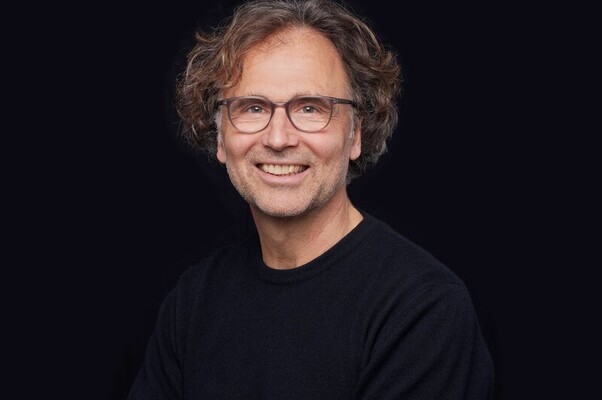
A conversation with EOFT program manager Paula Flach
In this interview, EOFT program manager Paula Flach talks about 25 years of the European Outdoor Film Tour, the evolution of film culture, AI, and why people stay at the center of it all.
Do you still remember your first EOFT?
My very first encounter with EOFT was on TV, back when there was a partnership with 3sat. I watched the films and thought, these are really great documentaries. I immediately wanted to know who was behind them.
When you look back on the last 25 years of EOFT, what phases stand out?
I've experienced EOFT firsthand since 2013, and that time was defined by growth. Audience numbers climbed, the films got bigger, and the genre became more visible, too. One pivotal moment was when the climbing film "Free Solo" won an Oscar. That's when you could see that outdoor film had truly arrived in the mainstream—something I never could have imagined 25 years ago: the speed of that development, and the fact that a subculture could grow into something that excites a broad audience. Then came 2020 and the major disruption of COVID. Our whole business is about bringing people together in shared spaces, and suddenly that was exactly what wasn't possible anymore.
What was a personal highlight for you?
One encounter that has really stayed with me was meeting the world-class climber Kyle Dempster. We had a conversation about what outdoor films are actually meant to achieve. My theory was that the protagonists vicariously live out something for us that we'd never do ourselves. But Kyle absolutely did not want to be that stand-in. He didn't want people to just consume his life—he wanted them to head out themselves, to experience something of their own. That left a lasting mark on how I see my work and how I choose films.
Sadly, Kyle is one of the people we've lost. [Editor's note: Kyle Dempster went missing in August 2016 while attempting Baintha Brakk II (6,980m), also known as Ogre II, in Pakistan, and is presumed dead.] And that's part of it, too: I have a number of contacts in my phone that no longer reach anyone. These are EOFT athletes we once worked with, whose stories we celebrated—and who are no longer alive, precisely because they lived this life.
What defines EOFT, no matter what changes?
People have always been at the center. Of course landscapes, powerful imagery, and athletic action are part of it. But what stays with you is a person going through something that moves me. That emotional core has never changed. If anything, it has grown even stronger over the years, and the program has gained depth.
How has film culture changed?
It has become more diverse and more democratic. In the past, you often needed a helicopter and big cameras to film in the mountains. Today, far more people can make films, using drones and smaller gear. On one hand, that's made the field bigger and more varied. On the other, a lot of films get made that simply aren't good enough. A good film takes time. In the end, what's decisive for us is that the story is good. It's not the most spectacular shot that makes a film strong, but what's being told. Diversity and representation have become more important, but they don't happen on their own. We have to actively seek them out, demand them, and follow through on them seriously.
When the human core is missing, you notice it right away.
What challenges are there?
We're noticing more and more often that scripts or voiceovers were created with AI. It often feels empty, and the films start to resemble one another. AI can help where it supports the process—but it must not replace creativity. When the human core is missing, you notice it right away.
What makes EOFT more than just a film event for you?
EOFT is a shared experience. For many people it's a fixed date on the calendar, and an EOFT fan rarely shows up alone. That matters more now than ever. We so often get lost in our screens and experience the world in isolation. EOFT creates a space where people experience something together. People who share an interest: in nature, in sport, and in real life.
What do you wish for the future of EOFT?
I hope EOFT stays a place of diversity. Especially in today's political climate, it's important to create spaces where people feel seen. The message should be: You're included—you belong. And the diversity that produces a different program every year—one that's always new, different, and surprising—must never be lost.